INQUIRY
Leave Your Message
0%

When you dive into the world of electronics, a Boost Converter really plays a pretty important part in managing power. Getting to know how this little device works can open up all sorts of cool possibilities. Basically, it takes a lower voltage input and ramps it up to a higher voltage output — which is why it's so crucial for portable gadgets.

You’ll find Boost Converters everywhere these days — in smartphones, laptops, even electric cars. They help these devices run smoothly and efficiently. But here’s the thing: not all Boost Converters are created equal. Some designs have flaws that could lead to inefficiency, overheating, or just not delivering enough power. That’s why it’s super important to really understand these components if you want to get the most out of them.

As technology keeps advancing, everyone’s pretty much demanding more efficiency. Engineers are constantly tweaking and improving these converters to meet those needs. Sure, there are still challenges — like finding the right balance between size, performance, and cost — but with ongoing testing and refinement, the future actually looks pretty bright for Boost Converters. Still, it’s worth keeping an eye on their limitations and learning how to overcome them.
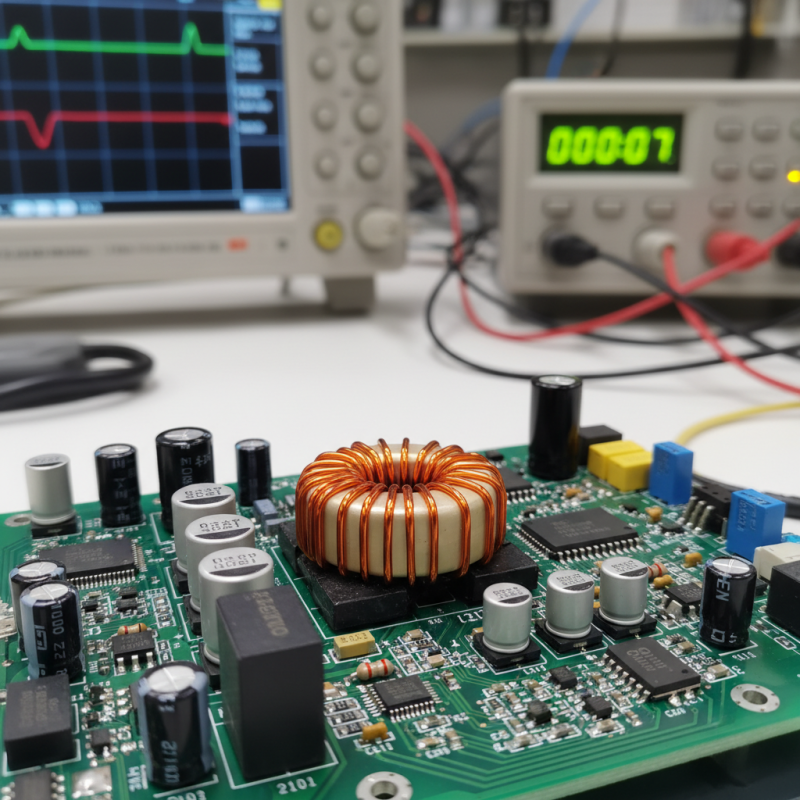
What is a Boost Converter and How Does It Work?

Definition and Purpose of a Boost Converter

A Boost Converter is a type of DC-DC converter. Its main purpose is to increase voltage from a lower level to a higher one. This is essential in applications where efficient power management is required. For example, if you need to power a device that requires 12 volts, but your battery only provides 5 volts, a Boost Converter can step up that voltage.

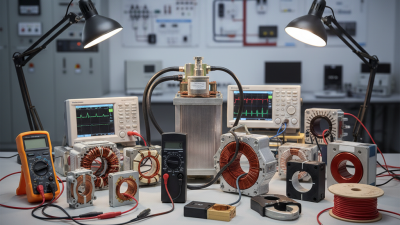
The key component in a Boost Converter is the inductor. ARod choke inductor for DC-DC converter effectively stores energy. When the current passes through the inductor, it creates a magnetic field. Then, when the energy is released, the voltage increases thanks to the inductor's ability to oppose changes in current. This can create a higher output voltage. However, not all designs are perfect. Some may generate unwanted noise or become inefficient at certain loads.

Boost Converters must also manage heat effectively. If they run too hot, their efficiency can drop. Finding the right components, like suitable inductors, is crucial. Consider the trade-offs between size and performance. Sometimes, a larger inductor may work better but also takes more space. Balancing all these factors requires careful consideration, and that can be challenging for designers.

What is a Boost Converter and How Does It Work? - Definition and Purpose of a Boost Converter

Parameter Description Typical Values
Input Voltage (Vin) The voltage supplied to the Boost Converter input. 3V to 30V
Output Voltage (Vout) The voltage produced at the Boost Converter output. 5V to 50V
Conversion Ratio The ratio of output voltage to input voltage. 1.5 to 10 (depends on design)
Efficiency Percentage of input power that is converted to output power. 85% to 95%
Control Method The method used to regulate the output voltage. Voltage mode, current mode
Typical Applications Uses of Boost Converters in various devices. Battery-powered devices, LED drivers, power supplies

Basic Operating Principle of a Boost Converter

What is a Boost Converter and How Does It Work?

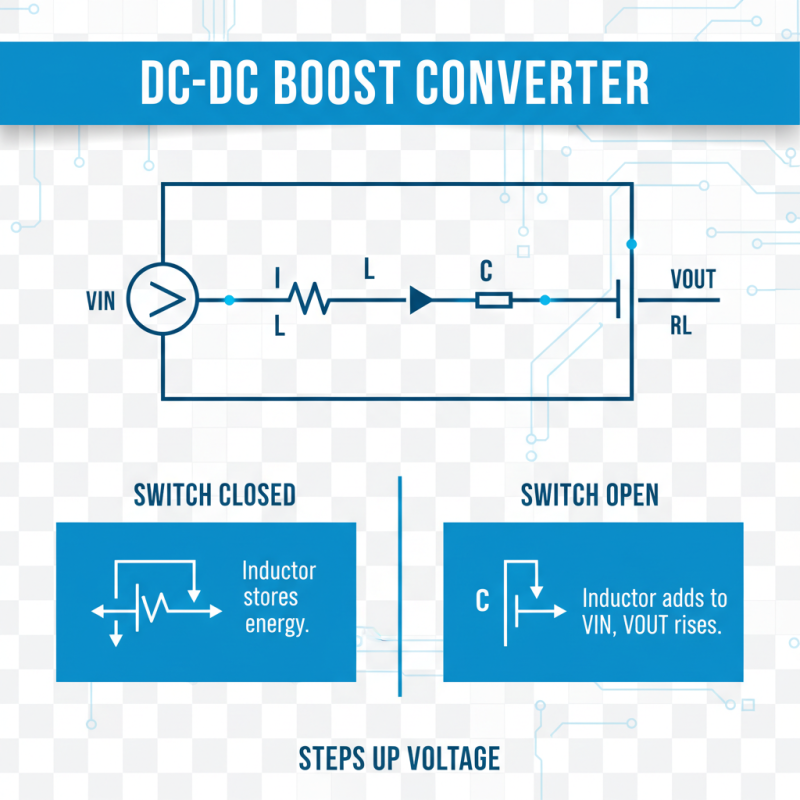
A Boost Converter is a type of DC-DC converter. It steps up voltage from a lower level to a higher level. The basic principle revolves around the inductor, switch, diode, and output capacitor. When the switch is closed, current flows through the inductor, storing energy. The inductor's magnetic field builds. Once the switch opens, the inductor releases energy. This energy adds to the input voltage, increasing the output voltage.

According to a recent market research report by Mordor Intelligence, the Boost Converter market is projected to grow significantly. The compound annual growth rate (CAGR) is expected to exceed 6% between 2022 and 2027. This growth reflects rising demand for renewable energy systems. However, the challenge lies in efficiency. Many Boost Converters operate well below optimal efficiency. This can lead to wasted energy and heat generation.

Understanding efficiency is crucial. Some reports suggest that many units achieve only around 85% efficiency. This inefficiency can be a concern in battery-powered devices. It prompts a need for better designs. Variable load conditions can complicate performance. Engineers might need to adjust parameters to match specific applications. Addressing these challenges is vital for enhancing overall performance.

Components of a Boost Converter Explained

A boost converter is an essential component in power electronics, designed to step up voltage from a lower level to a higher level. Understanding the various components that make up a boost converter is crucial for its effectiveness. At the heart of the system lies the inductor. It stores energy when the circuit is closed and releases it when opened. The difficulty comes from selecting the right inductor. If the value is too low, it won't store sufficient energy.

Next, the switch plays a pivotal role. It’s typically a transistor that controls the flow of current. When the switch closes, current flows through the inductor. When it opens, the energy discharges to the output. Timing is critical here. The wrong timing could lead to inefficiencies or damage.

Finally, the diode ensures that the current only flows in one direction. This is important for maintaining the desired output voltage. An incorrectly rated diode can lead to failure. There’s also the output capacitor, which smoothens the voltage. Choosing a capacitor with the right specifications is not straightforward. Each component must work harmoniously for optimal performance. The subtle interplay between them demands careful design and consideration.

Step-by-Step Functionality of a Boost Converter

A boost converter is an essential electronic device designed to increase voltage from a lower level to a higher one. Its functionality is intriguing and can be broken down into clear steps. First, the input voltage runs through an inductor. This inductor stores energy as a magnetic field while the switch is closed. It's crucial to have precise timing here. Too long, and the circuit can overheat; too short, and it won't charge enough.

Next, when the switch opens, the inductor releases its stored energy. This energy adds to the input voltage. The output capacitor smooths out any voltage spikes, providing a steady voltage supply. This step is vital for ensuring that connected devices receive stable power. A poorly designed output filter may lead to inefficiencies.

**Tip:** Always check the inductor’s value. Choosing the wrong inductor can cause significant voltage fluctuations. Additionally, ensure components are rated for the correct voltage. A mismatch here can lead to failure. Testing with a multimeter can help identify potential problems early on.

Boost Converter Efficiency Comparison

Applications of Boost Converters in Electronic Devices

Boost converters play a vital role in many electronic devices. These converters step up voltage from a lower level to a higher one efficiently. They are essential in portable electronics, renewable energy systems, and electric vehicles.

In smartphones, boost converters enhance battery life by ensuring that components receive the necessary voltage. They also help optimize performance in wearables, like fitness trackers and smartwatches. In electric vehicles, they manage power distribution, maintaining performance during acceleration.

Boost converters are not without challenges. Efficiency can vary based on design and load conditions. Sometimes, they generate noise that can affect circuit performance. Designers must consider these factors carefully. Balancing power, size, and efficiency isn't always straightforward.

Advantages and Disadvantages of Using Boost Converters

Boost converters are essential in various applications. They increase voltage levels efficiently, making them popular in portable devices. However, using them comes with pros and cons.

One advantage of boost converters is their ability to step up a low voltage. This is particularly useful for renewable energy systems. According to a recent report, boost converters can enhance efficiency by up to 95% in specific applications. This high efficiency can reduce power losses significantly. However, this doesn’t apply universally. In some cases, noise and ripple issues may occur. These can affect the performance of sensitive electronic devices.

On the flip side, boost converters can also introduce complexity. They often require additional components like inductors and switches, which can increase costs. Additionally, they might generate heat during operation. A study found that around 20% of energy can be lost as heat in poorly designed systems. This raises concerns over thermal management and reliability. Users must consider these factors carefully when designing circuits. Balancing efficiency with practicality is critical in leveraging boost converters effectively.

Common Issues and Troubleshooting Tips for Boost Converters

Boost converters are essential in various electronic applications. However, they can encounter several common issues. One major problem is inefficiency. If not designed properly, they may waste energy. High input current levels can lead to overheating, affecting performance. This often results in the need for careful selection of components.

Another frequent challenge is instability. An unstable output can cause devices to malfunction. This might stem from poor feedback loop designs. Ensuring proper loop compensation is critical. Additionally, improper grounding can introduce noise and further complicate stability. A good grounding technique can mitigate interference.

Troubleshooting these problems requires a methodical approach. Check the input and output voltages with a multimeter. Look for abnormal waveforms on an oscilloscope. If necessary, replace components one at a time to pinpoint issues. Documenting changes and observations can help identify patterns. This process, while tedious, is crucial for effective resolution.

FAQS

: What is the main benefit of the product?

: The product offers convenience and efficiency for daily tasks. It saves time in various activities.

How can users ensure they are using it correctly?

Follow the instructions provided. Regular practice improves skills and understanding of functionality.

What are the common challenges users face?

Some users struggle with initial setup. Familiarity takes time and can lead to frustration.

Are there any maintenance requirements?

Yes, regular cleaning and updates are necessary. Neglect can lead to reduced performance over time.

Can it be used in different environments?

Yes, it is versatile. However, extreme conditions may affect functionality.

What should users do if they encounter issues?

Troubleshooting guides are available. If problems persist, seeking help is advisable.

Is there a learning curve for new users?

Definitely. Users may need time to adjust. Patience is key to mastering its features.

What kinds of results can users expect?

Results vary based on use. Setting realistic expectations helps maintain motivation.

Are there any limitations?

Yes, there might be restrictions in certain scenarios. Understanding these can prevent disappointment.

How does user feedback influence future updates?

User feedback is valuable. It helps to improve features and address common concerns.

Conclusion

A Boost Converter is a type of DC-DC converter that steps up (increases) the voltage from a lower input level to a higher output level. Its primary purpose is to provide a voltage boost for applications that require higher voltage from a low-voltage source, making it essential for various electronic devices like portable chargers and LED drivers. The basic operating principle involves storing energy in an inductor and then releasing it to the output, resulting in a higher voltage.

The key components of a Boost Converter include an inductor, a switch (usually a transistor), a diode, and a capacitor. The functionality of a Boost Converter can be broken down into several steps: energy storage during the switch's on-state, and energy transfer to the output during the off-state. While Boost Converters offer several advantages, such as efficiency and compact design, they also come with disadvantages such as complexity and potential for electromagnetic interference. Understanding common issues and troubleshooting tips is vital for effective implementation in electronic applications.
Liam

Liam

Liam is a seasoned marketing professional at Zhuhai Eastever Electronic Co., Ltd., where he has dedicated over a decade to promoting advancements in passive electronic components. With an exceptional understanding of the industry, he specializes in the research, development, production, and sales......
Previous Understanding RF Transformers: Key Principles and Applications in Modern Technology